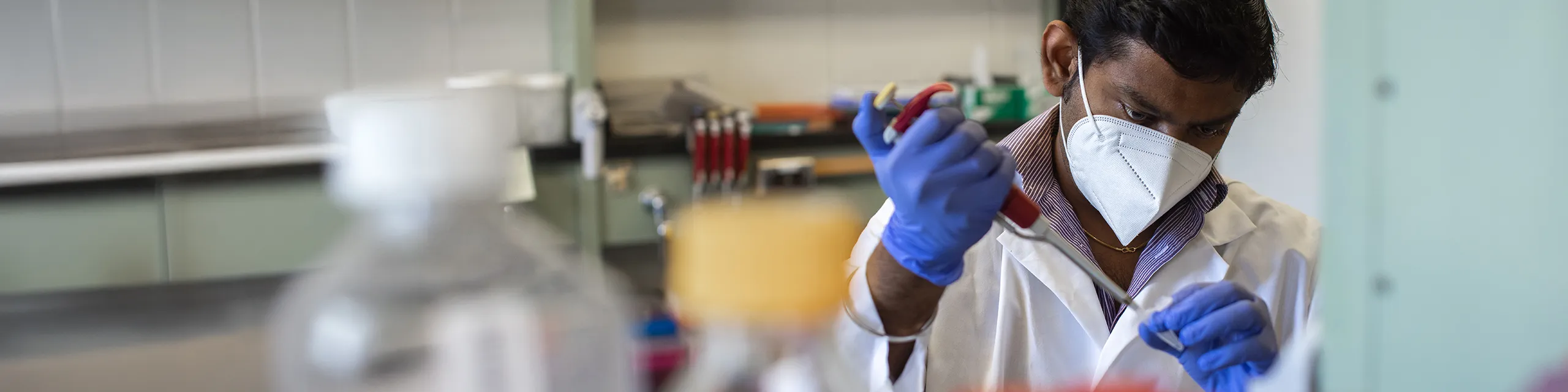
Program Overview
The University of Kansas offers a comprehensive PhD in Cancer Biology designed to prepare students for impactful careers in cancer research, academia, and industry. This program provides a robust foundation in molecular and cellular biology, alongside cutting-edge research opportunities that address critical questions in cancer prevention, diagnosis, and treatment.
Why Pursue a PhD in Cancer Biology at KU?
Our PhD in Cancer Biology program is structured to equip students with the skills needed to become leaders in cancer research. With access to advanced laboratory facilities, mentorship from renowned faculty, and extensive collaboration opportunities, KU offers one of the best cancer biology PhD programs available. Students will gain expertise in topics such as tumor biology, cancer genetics, and immunotherapy.
Learn more about KU
Graduate
For more information about the program, visit the program page below.
Cancer Biology, Ph.D.KU School of Medicine
The Doctorate in Cancer Biology is part of the School of Medicine, a hub for outstanding educational programs and world-class research.Doctorate in Cancer Biology Learning Outcomes
Graduates from KU’s PhD in Cancer Biology program will:
- Demonstrate advanced understanding of cancer biology concepts, including cellular mechanisms and tumor development
- Develop expertise in experimental design, data analysis, and laboratory research techniques
- Produce independent, innovative research with real-world implications for cancer prevention, diagnosis, and treatment
- Effectively communicate research findings through publications and presentations
What Careers Are Possible With a Doctorate in Cancer Biology?
A PhD in Cancer Biology from KU opens doors to diverse career opportunities. Graduates pursue roles in:
- Academic research and teaching
- Pharmaceutical and biotechnology industries
- Cancer-focused non-profit organizations
- Government agencies such as the NIH and CDC
According to Lightcast data, professionals with a cancer biology PhD often secure positions as research scientists, medical scientists, and clinical laboratory directors, with competitive salary potential.
Tuition and Financial Aid
KU is committed to making graduate education affordable. Tuition costs vary based on residency status and course load. Tuition costs vary based on residency status and credit load. For current tuition rates and fees, visit the KUMC Registrar’s Office. For information on scholarships, fellowships, and other financial assistance, visit the KUMC Financial Assistance page.Admission Requirements
Applicants to the cancer biology PhD program must meet the following requirements:
- Bachelor’s from an accredited institution, including official transcripts
- Prerequisite coursework includes: one year of general chemistry; one year of organic chemistry (or one semester of organic chemistry and one semester of biochemistry); one year of biological sciences; one semester of calculus; and one semester of physics
- Minimum GPA of 3.0 on a 4.0 scale
- Three letters of recommendation
- Relevant laboratory or research experience is strongly recommended
- Background check
- Non-native English speakers (domestic or international) must demonstrate English proficiency per KUMC requirements
For detailed application instructions, visit the Department of Cancer Biology.
Student Life and Learning Experiences
KU’s PhD in Cancer Biology program emphasizes hands-on research. Students actively participate in groundbreaking studies across disciplines such as molecular biology, immunology, and genetics. Through collaboration with KU’s Cancer Center, students gain invaluable experience contributing to innovative cancer treatment strategies.
KU’s PhD in Cancer Biology is based at the University of Kansas Medical Center (KUMC) campus in Kansas City, Kansas. Students are embedded in an active academic medical environment alongside faculty researchers, clinicians, and a wider biomedical sciences graduate community. The Cancer Biology Society, a student-run organization sponsored by the department, provides social events, community outreach (including volunteer work at the Hope Lodge in Kansas City), and funding support for students to present at regional and national conferences. Kansas City offers a vibrant metro area with cultural, dining, and recreational amenities to complement graduate life.
Doctorate in Cancer Biology Sample Courses
Students in KU’s PhD in Cancer Biology program engage in a diverse set of courses that blend foundational knowledge with research training. Sample courses include:
- Mechanisms of Tumor Development and Progression
- Methods in Cancer Biology
- Carcinogenesis and Cancer Biology
- Tumor Microenvironment
For a complete list of required and elective courses, visit the KU Academic Catalog.
Doctorate in Cancer Biology Frequently Asked Questions
When should I apply?
Application deadlines and instructions are set by the Interdisciplinary Graduate Program in Biomedical Sciences (IGPBS). Visit the IGPBS website for current deadlines and application details.
How long will it take to complete the degree?
Students typically complete this degree in 4-6 years.