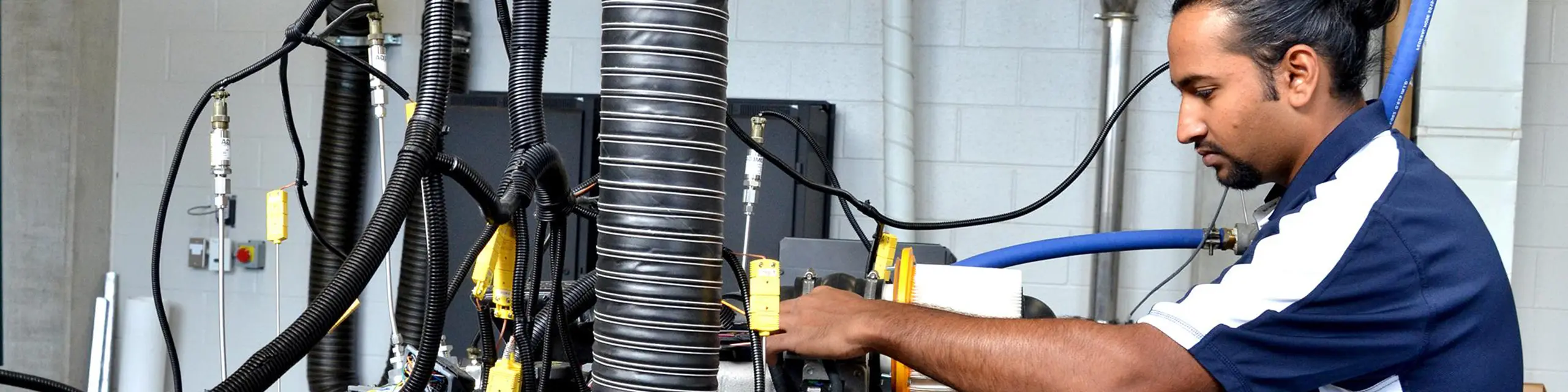
Program Overview
The University of Kansas offers a comprehensive environmental engineering Ph.D. program designed to prepare students for advanced careers in research, academia, and industry. This rigorous doctoral program combines advanced coursework, independent research, and interdisciplinary collaboration within the Department of Civil, Environmental & Architectural Engineering to develop the next generation of environmental engineering scholars and leaders.
Students pursuing an environmental engineering Ph.D. at KU engage in advanced study and original research focused on protecting human health and the environment. Areas of emphasis include water and wastewater treatment processes, environmental chemistry, environmental microbiology, air quality engineering, hazardous waste management, and sustainable infrastructure systems. Through a combination of specialized coursework and dissertation research, graduates are prepared to address complex environmental challenges such as climate adaptation, emerging contaminants, pollution prevention, and resilient infrastructure systems.
Our faculty are nationally and internationally recognized for their research in environmental processes, treatment technologies, and systems analysis. Doctoral students work closely with faculty advisors to design and execute independent research that contributes new knowledge to the discipline. By earning a Ph.D. in environmental engineering, students develop advanced analytical, experimental, and computational skills that position them for leadership roles in academia, government laboratories, consulting firms, and industry.
The Ph.D. environmental engineering curriculum is structured to support both depth and breadth of expertise. Students complete advanced coursework tailored to their research focus, pass qualifying and comprehensive examinations, and produce a dissertation that demonstrates significant, original contributions to the field. This structure ensures graduates are well prepared to lead research initiatives and advance innovation across a wide range of environmental engineering programs nationally and globally.
Learn more about KU
Graduate
For more information about the program, visit the program page below.
Environmental & Water Resources Engineering, Ph.D.KU School of Engineering
The Doctorate in Environmental and Water Resource Engineering is part of the School of Engineering, where new technologies are developed to solve the problems facing the world.Doctorate in Environmental and Water Resources Engineering Learning Outcomes
Graduates of KU’s environmental engineering Ph.D. program will:
- Demonstrate advanced expertise in environmental engineering theory, quantitative analysis, and research methodology
- Conduct independent, original research that contributes new knowledge to the discipline
- Design and execute experimental, computational, or field-based investigations using appropriate engineering tools and methods
- Critically evaluate scientific literature and synthesize complex technical information
- Effectively communicate research findings through peer-reviewed publications, grant proposals, and professional presentations
- Uphold ethical standards and professional responsibility in research and engineering practice
What Careers Are Possible with a Doctorate in Environmental and Water Resources Engineering?
Graduates of the environmental engineering Ph.D. program pursue careers in academia, research institutions, government agencies, and private industry. Potential career paths include:
- Environmental Engineer
- Research Scientist
- University Professor
- Environmental Consultant
- Regulatory Specialist
- Water Quality or Treatment Process Expert
According to Lightcast, professionals in advanced engineering and research roles often command competitive salaries and demonstrate strong long-term earning potential. Earning a doctorate can expand leadership opportunities and positively influence long-term environmental engineering programs workforce outcomes.
Tuition and Financial Aid
The University of Kansas is committed to providing affordable education through various financial aid opportunities. Scholarships, assistantships, and loans are available for qualified students.
For more details on tuition, financial aid, and assistantships, please visit KU Scholarships & Financial Aid.
Admission Requirements
To apply for the Environmental Engineering Ph.D. program, applicants must meet the following requirements:
- An ABET-accredited bachelor’s degree in engineering is required, including official transcripts
- A minimum 3.0 GPA (on a 4.0 scale)
- GRE scores may be required (check the KU website for current requirements)
- Statement of purpose outlining research interests and career goals
- Three letters of recommendation from academic or professional references
- TOEFL or IELTS scores for non-native English speakers (if applicable)
For specific details about the application process, visit KU Graduate Admissions.
Student Life and Learning Experience
The environmental engineering Ph.D. experience at KU centers on close mentorship, collaborative research, and professional development. Doctoral students work directly with faculty advisors and research teams to design experiments, analyze complex data, and contribute to funded research initiatives.
Students have access to advanced laboratory facilities and field instrumentation that support work in water and wastewater treatment, environmental process modeling, air quality analysis, and contaminant fate and transport. Participation in seminars, interdisciplinary research groups, and professional conferences further enhances scholarly development within the Ph.D. environmental engineering community.
Doctorate in Environmental and Water Resources Engineering Sample Courses
The environmental engineering Ph.D. curriculum includes advanced coursework selected in consultation with a faculty advisor to support each student’s research focus. Sample graduate-level courses may include:
- Environmental Monitoring & Field Methods
- Design of Timber Structures
- Biology Principles of Environmental Engineering
- Chemical Principles of Environmental Engineering Processes
For a full list of courses, visit the KU Catalog.
Doctorate in Environmental and Water Resources Engineering Frequently Asked Questions
When should I apply?
Application deadlines for each entry term are:
- Fall semester: Priority deadline of Dec. 2, final deadline of Aug. 1.
- Spring semester: Priority deadline of Oct. 1, final deadline of Dec. 16.
- Summer semester: Priority deadline of Dec. 2, final deadline of May 19.
Is there a thesis option?
Both thesis and non‑thesis options may be available depending on your plan of study; consult with the program for current options.
How long does it take to complete?
Most students finish in 3-5 years full‑time; part‑time pacing is available and varies by course load.