Program Overview
The PhD in Molecular and Integrative Physiology program at the University of Kansas offers an immersive and comprehensive education designed to prepare students for careers in biomedical research, academia, and healthcare innovation. Students enter this program through the Interdisciplinary Graduate Program in the Biomedical Sciences (IGPBS), which provides a shared first-year curriculum including foundational coursework and laboratory rotations across KU School of Medicine’s basic science departments. After completing the IGPBS year and selecting a research mentor, students formally join the Molecular and Integrative Physiology graduate program and choose one of three specialization tracks: Cellular & Integrative Physiology, Neuroscience, or Reproduction & Development.
Why Pursue a PhD in Molecular and Integrative Physiology at KU?
Our PhD in Molecular and Integrative Physiology program is built on a foundation of cutting-edge research, state-of-the-art laboratory experiences, and mentorship from experienced faculty. Students will develop a deep understanding of physiological processes, combining molecular biology, biochemistry, and systems biology to address scientific challenges. Graduates from this program are well-prepared for roles in research institutions, medical schools, and biotechnology companies.
Learn more about KU
Graduate
For more information about the program, visit the program page below.
Molecular & Integrative Physiology, Ph.D.KU School of Medicine
The Doctorate in Molecular and Integrative Physiology is part of the School of Medicine, a hub for outstanding educational programs and world-class research.Doctorate in Molecular and Integrative Physiology Learning Outcomes
Graduates of the PhD in Molecular and Integrative Physiology program will:
- Critically assess prior research literature and identify gaps in scientific knowledge
- Design and execute novel experiments using appropriate methods to test original hypotheses
- Communicate research findings effectively through writing, data visualization, and oral presentations
- Demonstrate scientific integrity and professional conduct in research and academic settings
- Contribute to collaborative scientific or educational efforts as both a team member and a leader
- Apply awareness of diversity and difference to teaching, research, and professional practice
What Careers Are Possible With a Doctorate in Molecular and Integrative Physiology?
Earning a PhD in Molecular and Integrative Physiology opens doors to various career paths. Graduates commonly pursue roles such as:
- Biomedical Research Scientist
- University Professor or Lecturer
- Pharmaceutical or Biotechnology Consultant
- Healthcare Data Analyst
- Government or Nonprofit Policy Advisor
According to Lightcast data, professionals with a PhD in Molecular and Integrative Physiology can expect competitive salaries, with roles in research and development offering particularly strong career growth potential.
Tuition and Financial Aid
KU offers competitive tuition rates and multiple funding opportunities for graduate students. Financial aid options include research assistantships, fellowships, and grants. For more information on funding your PhD in Molecular and Integrative Physiology, visit the Office of Financial Aid.Admission Requirements
To apply for the PhD in Molecular and Integrative Physiology program at KU, candidates must meet the following criteria:
- A bachelor’s degree from an accredited institution, including official transcripts
- Prerequisite coursework:
- One year of general chemistry
- One year of organic chemistry, or one semester of organic chemistry and one semester of biochemistry
- One year of biological sciences
- One semester of calculus
- One semester of physics
- A minimum GPA of 3.0 (on a 4.0 scale)
- Background check (required during the admissions process; may affect eligibility)
- GRE scores
- Three letters of recommendation
- Research experience beyond course-associated labs is strongly encouraged
- For international applicants, TOEFL or IELTS scores may be required
For complete details on the application process, visit the Department of Cell Biology and Physiology.
Student Life and Learning Experiences
KU’s PhD in Molecular and Integrative Physiology program emphasizes hands-on research experiences. Students engage in laboratory rotations, collaborative research projects, and independent dissertation work. Research areas include:
- Cardiovascular Physiology
- Neurophysiology
- Cellular Signal Transduction
- Metabolism and Energy Regulation
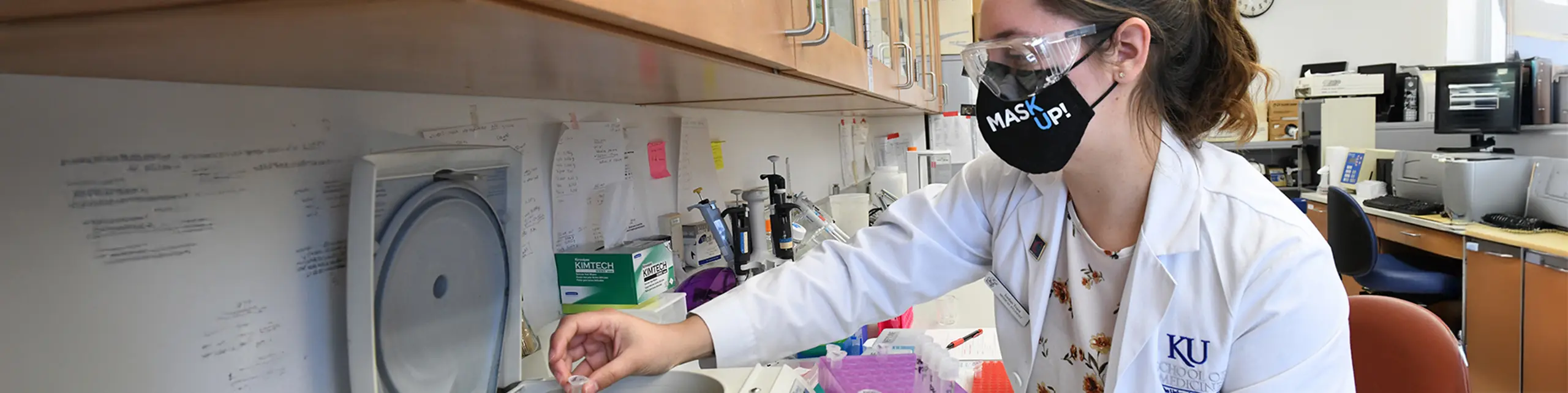
Students have access to cutting-edge equipment, innovative technologies, and partnerships with renowned medical institutions.
Doctorate in Molecular and Integrative Physiology Sample Courses
The PhD in Molecular and Integrative Physiology curriculum at KU blends foundational coursework with specialized electives. Sample courses include:
- Proteins and Metabolism
- Molecular Genetics
- Cellular Structure
- Cell Communication
- Introduction to Research Ethics
- Human Physiology I–IV
For a full list of courses, visit the KU Catalog.
Doctorate in Molecular and Integrative Physiology Frequently Asked Questions
When should I apply?
Applications are open and accepted on a rolling basis.
How long will it take to complete the degree?
Degree requirements are normally completed within six years of admission, though a maximum of eight years is allowed. Individual timelines vary based on dissertation research.