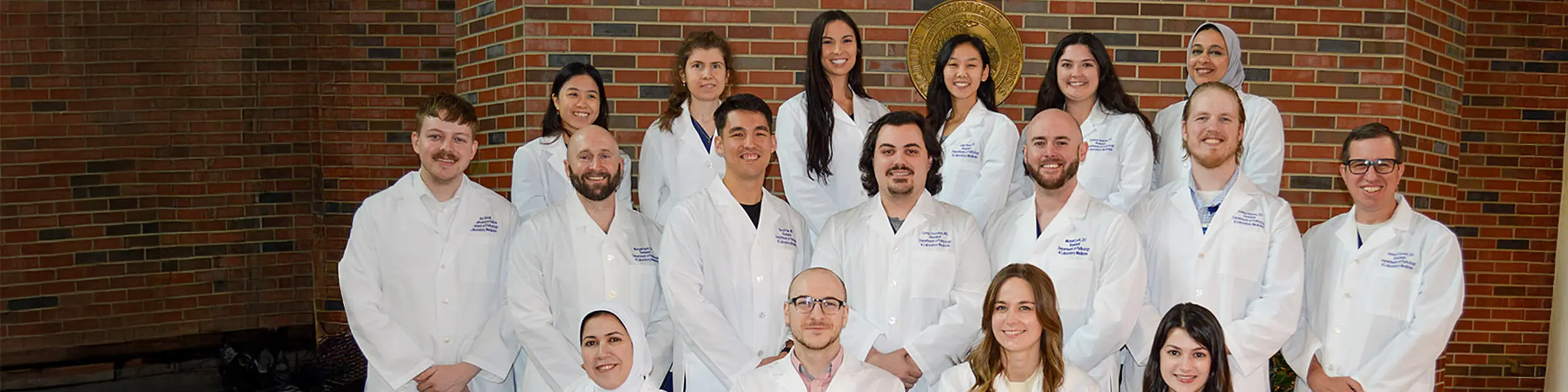
Program Overview
The PhD in Pathology at the University of Kansas Medical Center provides comprehensive, research-intensive training in the molecular basis of disease and the fundamental mechanisms of cell growth and differentiation. Students pursue subspecialized research in areas including cancer biology, stem cell biology, developmental and reproductive biology, microbial and viral pathogenesis, and vascular biology.
Doctoral students enter through the Interdisciplinary Graduate Program in Biomedical Sciences (IGPBS), completing a broad foundation in modern biomedical science research during their first year before joining the Department of Pathology & Laboratory Medicine. From there, the program emphasizes experimental laboratory investigation, critical analysis of scientific literature, and the development of independent research — culminating in published, peer-reviewed scholarship and a defended dissertation.
Why Pursue a PhD in Pathology?
The PhD in Pathology program at KU provides a comprehensive education in molecular biology, cellular biology, and immunology, combined with hands-on research experience. Students gain essential skills for careers in scientific investigation, medical research, and healthcare innovation. As a leading pathology PhD program, KU’s curriculum emphasizes interdisciplinary learning, offering students the chance to collaborate with medical professionals and researchers throughout the university’s medical community.
Learn more about KU
Graduate
For more information about the program, visit the program page below.
Pathology, Ph.D.KU School of Medicine
The Doctorate in Pathology is part of the School of Medicine, a hub for outstanding educational programs and world-class research.Doctorate in Pathology Learning Outcomes
Graduates of the PhD in Pathology program will be able to:
- Integrate and apply advanced knowledge in molecular mechanisms, cellular biology, and disease pathogenesis to design and interpret original research
- Independently conceive, execute, and defend a hypothesis-driven dissertation that contributes to the field of pathology
- Analyze complex biological problems and propose testable solutions through critical thinking and multi-method experimental approaches
- Communicate research findings through peer-reviewed publications and presentations at local, national, or international conferences
- Demonstrate ethical conduct and professional behavior in laboratory and research settings, consistent with institutional guidelines
- Develop leadership skills in grant writing, mentorship, and career planning for academic, clinical, or industry roles
What Careers Are Possible With a Doctorate in Pathology?
A PhD in Pathology opens doors to numerous career opportunities in academia, research institutions, and the healthcare industry. Graduates may pursue roles such as:
- Biomedical Research Scientist
- University Faculty Member
- Clinical Laboratory Director
- Pharmaceutical Researcher
According to Lightcast data, individuals with a PhD in Pathology can earn competitive salaries, with experienced researchers achieving higher income levels.
Tuition and Financial Aid
The PhD in Pathology program offers competitive tuition rates, and students may access various funding opportunities such as graduate assistantships, research grants, and scholarships. For financial aid details, visit the Office of Financial Aid.Admission Requirements
Prospective students seeking to join the PhD in Pathology program should meet the following admission requirements:
- Bachelor’s degree from a regionally accredited institution, with official transcripts confirming the degree has been conferred
- Cumulative GPA of at least 3.0 on a 4.0 scale
- Prerequisite coursework: one year of general chemistry; one year of organic chemistry (or one semester of organic chemistry and one semester of biochemistry); one year of biological sciences; one semester of calculus; one semester of physics
- Three letters of recommendation
- Research experience beyond standard lab coursework (strongly encouraged)
- Background check (required during the admissions process)
- Non-native English speakers must meet KU’s Minimum English Proficiency Requirement
For detailed information on eligibility, visit the Department of Pathology and Laboratory Medicine.
Student Life and Learning Experiences
PhD in Pathology students are based at the University of Kansas Medical Center in Kansas City, where they conduct advanced research in state-of-the-art laboratory facilities. Opportunities include:
Collaborative research with KUMC faculty across biomedical science disciplines Participation in national and international pathology and biomedical research conferences Hands-on laboratory training in molecular, cellular, and experimental pathology techniques
KU Medical Center offers a collegial academic community with professional development resources, student organizations, and a strong network of faculty mentors committed to student success.
Doctorate in Pathology Sample Courses
KU’s PhD in Pathology curriculum blends core coursework with specialized research training. Sample courses include:
- Proteins and Metabolism
- Molecular Genetics
- Cellular Structure
- Cell Communication
- Biographics
For a complete list of courses and credit requirements, refer to the KU Catalog.
Doctorate in Pathology Frequently Asked Questions
When should I apply?
Applications are open and accepted on a rolling basis.
How long will it take to complete the degree?
Students typically complete this degree in five years, though a maximum of eight years is permitted.