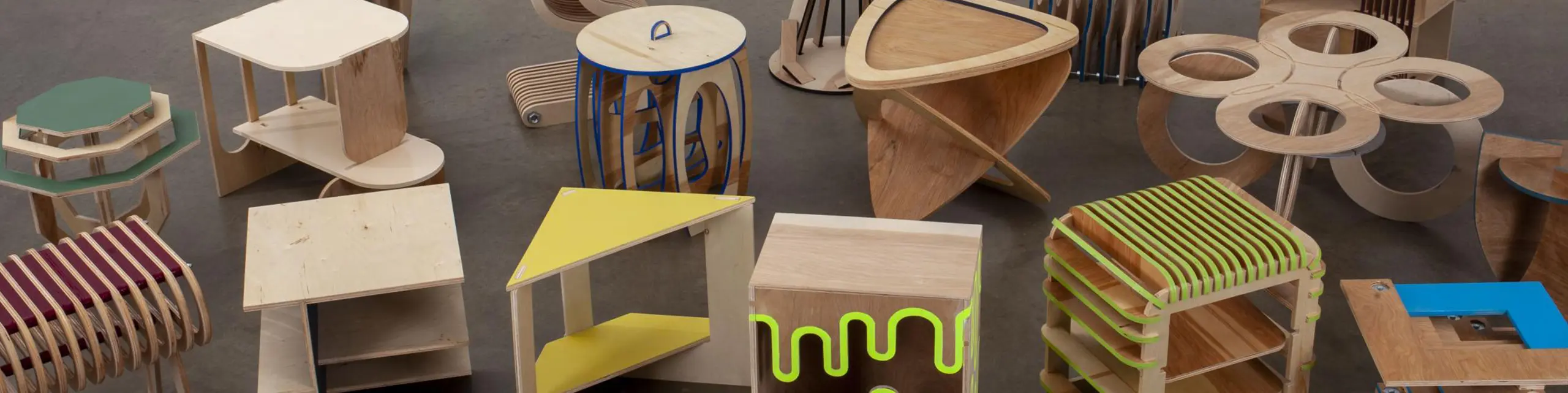
Program Overview
The industrial design major prepares students to shape the products, systems, and experiences that define everyday life. Blending creativity, technical skill, and human-centered thinking, this program empowers students to design solutions that are functional, sustainable, and meaningful. As part of a Bachelor of Fine Arts, students in this industrial design major develop a deep understanding of how design impacts people, industries, and the environment.
Through a studio-based curriculum, students pursuing a degree in industrial design learn to translate ideas into tangible outcomes. Coursework emphasizes concept development, sketching, digital modeling, prototyping, and material exploration. Students refine their ability to think critically and iteratively, gaining the confidence to approach complex design challenges from multiple perspectives. This hands-on approach ensures that graduates of the industrial design major are prepared to contribute immediately in professional settings.
The program integrates artistic exploration with practical application, making it a strong choice for students seeking a bachelor’s degree in industrial design that balances creativity and technical rigor. Students learn to analyze user needs, market trends, and production constraints while developing innovative solutions. By working on real-world design problems, students in the industrial design major build a portfolio that reflects both their creative vision and their ability to execute ideas effectively.
Collaboration is a key component of the learning experience. Students pursuing a BFA in industrial design engage in interdisciplinary projects that mirror professional design environments. They work alongside peers and faculty mentors to refine their ideas, receive constructive feedback, and iterate on their designs. This collaborative environment helps students in the industrial design major develop communication and teamwork skills that are essential in the field.
Sustainability and ethical design practices are also central to the curriculum. Students in this industrial design major are encouraged to consider the broader impact of their work, from material sourcing to product lifecycle. By integrating sustainable design principles, students develop solutions that are not only innovative but also responsible and forward-thinking.
Learn more about KU
Undergraduate
For more information about the program, visit the program page below.
Industrial Design, BFASchool of Architecture and Design
The Bachelor’s in Industrial Design is part of the KU School of Architecture and Design, where students are driven to meet challenges through relentless creativity and solutions-based design.Bachelor’s in Industrial Design Learning Outcomes
Students completing the industrial design major will be able to:
- Apply design thinking methodologies to solve complex problems creatively and effectively
- Demonstrate proficiency in drawing, digital modeling, and prototyping techniques relevant to a degree in industrial design
- Develop innovative product concepts that respond to user needs and market conditions
- Communicate design ideas clearly through visual, verbal, and written formats
- Integrate sustainability and ethical considerations into design solutions within a bachelor’s degree in industrial design
- Collaborate effectively in team-based environments reflective of professional practice
- Build a comprehensive portfolio demonstrating the skills gained through a BFA in industrial design
What careers are possible with a Bachelor’s in Industrial Design?
Graduates of the industrial design major are prepared for a wide range of creative and technical careers. Common career paths include:
- Product designer
- Industrial designer
- User experience (UX) designer
- Furniture designer
- Packaging designer
- Design researcher
- Exhibit or environmental designer
According to Lightcast, professionals with a degree in industrial design are employed across industries such as manufacturing, technology, consumer goods, and consulting. The versatility of the industrial design major allows graduates to adapt to evolving industry demands and emerging design fields.
Tuition and Financial Aid
Students pursuing the industrial design major have access to a variety of financial resources to support their education. Tuition rates vary based on residency status, and detailed cost information is available through the university’s financial aid office.
Scholarships, grants, and work-study opportunities are available for students enrolled in a bachelor’s degree in industrial design. Financial aid advisors can help students in the industrial design major identify funding opportunities and develop a plan to manage educational expenses. Visit KU Financial Aid for more information.
Admission Requirements
Admission to the industrial design major at KU requires meeting these admission standards:
Freshmen
- Apply by Nov. 1 for guaranteed admission
- Transcript demonstrating at least 1 high school art, design, or drawing class with grade of B or higher
- 3.8+ GPA on a 4.0 scale OR
- 3.5 – 3.79 GPA on a 4.0 scale and ACT 24+/SAT 1160+
Transfers
- 3.5+ cumulative GPA over 2 semesters of full-time enrollment
Applicants to Animation, Illustration, Industrial Design, Interaction Design, or Visual Communication Design who do not meet guaranteed criteria must submit a portfolio. Portfolios should be submitted in PDF format via email to arcd@ku.edu.
For detailed admission criteria and audition requirements, visit the School of Architecture & Design.
Student Life and Learning Experience
Students in the industrial design major benefit from an immersive and collaborative learning environment. Studio courses provide opportunities to work on hands-on projects, explore new materials, and develop design solutions from concept to completion.
Participation in design exhibitions, competitions, and internships enhances the experience of students pursuing a bachelor’s degree in industrial design. These opportunities allow students to showcase their work, gain industry experience, and build professional networks.
The industrial design major also encourages involvement in student organizations and interdisciplinary initiatives. These experiences help students develop leadership skills and connect with peers who share their passion for design.
Bachelor’s in Industrial Design Sample Courses
Coursework in the industrial design major may include:
- Drawing for Industrial Design
- Materials and Processes
- Computer-Aided Design
- Human Factors and Ergonomics
For a full list of degree requirements, visit the KU Catalog.
Bachelor’s in Industrial Design Frequently Asked Questions
When should I apply?
Applications are open and accepted on a rolling basis.
How long will it take to complete the degree?
Students typically complete this degree in four years.