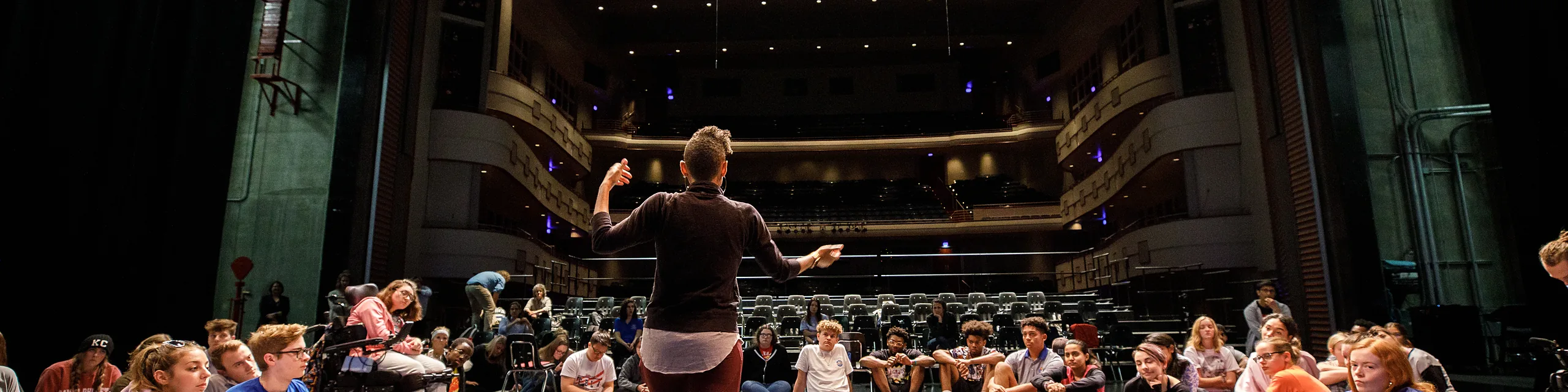
Program Overview
A theatre major offers students the opportunity to study performance, storytelling, and stage production while developing skills in collaboration, communication, and creative problem solving. The Bachelor of Arts and Bachelor of General Studies options provide flexible pathways for students who want a strong liberal arts education combined with a rigorous theatre degree. Students pursuing a major in theatre explore acting, directing, dramaturgy, design, stage management, and theatre history while gaining practical experience through coursework and productions.
The theatre major emphasizes both artistic practice and critical study of theatre as a cultural and social art form. Through the curriculum, students engage with dramatic literature, performance theory, and theatre history while building hands-on production experience. This balanced approach allows students to graduate with both scholarly understanding and professional skills applicable to the performing arts and many other industries.
Students completing a degree in theatre work closely with faculty members who are professional artists, scholars, and practitioners. Coursework encourages students to analyze performance traditions across cultures and time periods while developing their own creative voice. As part of the theatre arts degree, students may participate in productions throughout the academic year, allowing them to apply classroom concepts directly to live performances.
The theatre major is designed to foster creativity while developing practical communication and leadership abilities. Theatre students regularly collaborate with peers across multiple production roles such as performers, directors, designers, technicians, and managers. This collaborative environment is central to the experience of pursuing a bachelors in theatre, preparing students for careers that require teamwork, adaptability, and effective storytelling.
Students in a theatre degree program also explore how performance intersects with culture, politics, and social issues. Coursework may examine the role of theatre in shaping public dialogue and reflecting diverse perspectives. By studying both contemporary and historical performance traditions, students pursuing a major in theatre learn how artistic expression can influence communities and contribute to meaningful conversations about society.
Hands-on training is an essential part of the theatre major. Students participate in rehearsals, design projects, workshops, and performances that provide real-world production experience. These opportunities allow students to apply techniques learned in class while gaining practical knowledge about rehearsal processes, stagecraft, and theatrical storytelling.
Students pursuing a degree in theatre benefit from access to performance spaces, rehearsal studios, design labs, and production facilities that support creative exploration. Whether working on acting techniques, scenic design projects, or directing assignments, students gain experience with the tools and technologies used in modern theatre production. This practical experience strengthens the professional preparation provided by a theatre arts degree.
Learn more about KU
Undergraduate
For more information about the program, visit the program page below.
Theatre, BA/BGSKU College of Liberal Arts and Sciences
The Bachelor’s in Theatre is part of the College of Liberal Arts and Sciences, home to a collaborative and creative community making the world better through inquiry and research.Bachelor’s in Theatre Learning Outcomes
Students completing the theatre major will be able to:
- Evaluate theatre performance within its cultural and historical context, including how performance responds to society and drives social change, and articulate recurring themes, styles, and influences across theatre history.
- Practice and apply foundational and advanced techniques in theatre craft — including acting, directing, dramaturgy, and design — through coursework, self-assessment, and production-based experimentation.
- Analyze dramatic texts and performances using critical and scholarly frameworks, engaging with theatre as both an art form and a cultural force.
- Collaborate effectively as part of production teams and creative ensembles, taking on roles as actors, directors, designers, dramaturgs, technicians, and stage managers across a range of production types — from new works and published plays to devised work and classics.
- Communicate ideas clearly through written, oral, and performance-based work, building skills applicable to careers in the performing arts and beyond.
- Engage equitably with people from diverse local and global backgrounds, demonstrating the cultural awareness and professional habits that the field requires.
What Careers are Possible with a Bachelor’s in Theatre?
Graduates of a theatre major develop creative and analytical skills that translate to many professional paths. Career paths connected to a theatre degree may include:
- Actor or performer
- Theatre director
- Stage manager
- Scenic, lighting, or costume designer
- Production manager
- Arts administrator
- Casting professional
- Event producer
Graduates with a degree in theatre may also pursue careers in communication, entertainment, marketing, education, and nonprofit leadership. According to labor market insights from Lightcast, skills developed through a theatre arts degree, including communication, teamwork, and public presentation, are widely valued across industries.
Many students completing a bachelors in theatre also pursue graduate study in theatre, film, arts administration, education, or related fields.
Tuition and Financial Aid
Tuition rates for the theatre major vary based on residency status and enrollment pathway. The University of Kansas offers scholarships, grants, loans, and work-study opportunities to support students financially. For more information, visit KU Financial Aid.Admission Requirements
All students interested in the theatre major must meet the standard University of Kansas admission requirements for incoming freshman and transfer students:
Freshman
- 3.25 high school GPA OR 2.0 GPA and 21+ ACT
Transfer
- Assured admission with 24+ transferrable credit hours with a 2.5+ GPA from a regionally accredited higher education institution.
The BA and BGS in Theatre each require 40 hours of major coursework as part of a 120-credit-hour degree. Both degrees share the same core theatre curriculum; the difference lies in degree-level requirements outside the major. The BA requires demonstrated proficiency in a non-English language. The BGS does not have a language requirement but does require an 18-hour junior/senior concentration, minor, or second major. Students unsure which path is right for them are encouraged to speak with a Theatre & Dance advisor.
For detailed admission requirements, visit KU Admissions?utm_source=degrees-site.
Student Life and Learning Experiences
Students enrolled in a theatre major experience a vibrant artistic community that includes productions and collaborative creative projects. Participation in performances allows students pursuing a theatre degree to gain hands-on experience working alongside peers, faculty, and guest artists. Rehearsals and productions form an important part of the degree in theatre experience.
Auditioning for KU Theatre Productions
Admission to the BA or BGS in Theatre program does not require an audition. However, students who want to perform in University Theatre productions — which include dramas, musicals, and opera each season — audition separately for those opportunities.
The University Theatre holds auditions each academic year and is open to all KU students, not only theatre majors. Productions are fully staged with professional-grade sets, lighting, costumes, and direction. Participating in a production is one of the most valuable experiences available to theatre students at KU, providing real rehearsal and performance experience alongside peers, faculty, and guest artists.
For current audition dates, requirements, and how to prepare, visit University Theatre Auditions.
Bachelor’s in Theatre Sample Courses
Students pursuing a theatre major complete coursework that blends performance, production, and theatre scholarship.
Examples of courses that may be included in a degree in theatre curriculum include:
- Acting I & II
- Theatre Practicum I & II
- Beginning Voice and Speech for Actors
- Script Analysis
- Stage Management and Assistant Direction
These courses help students pursuing a major in theatre build artistic and technical skills. The curriculum associated with the theatre arts degree combines academic analysis with production-based learning. For a comprehensive list of courses and detailed descriptions, please review the KU Catalog.
Bachelor’s in Theatre Frequently Asked Questions
When should I apply?
Applications are open and accepted on a rolling basis.
How long will it take to complete the degree?
Students typically complete this degree in four years.