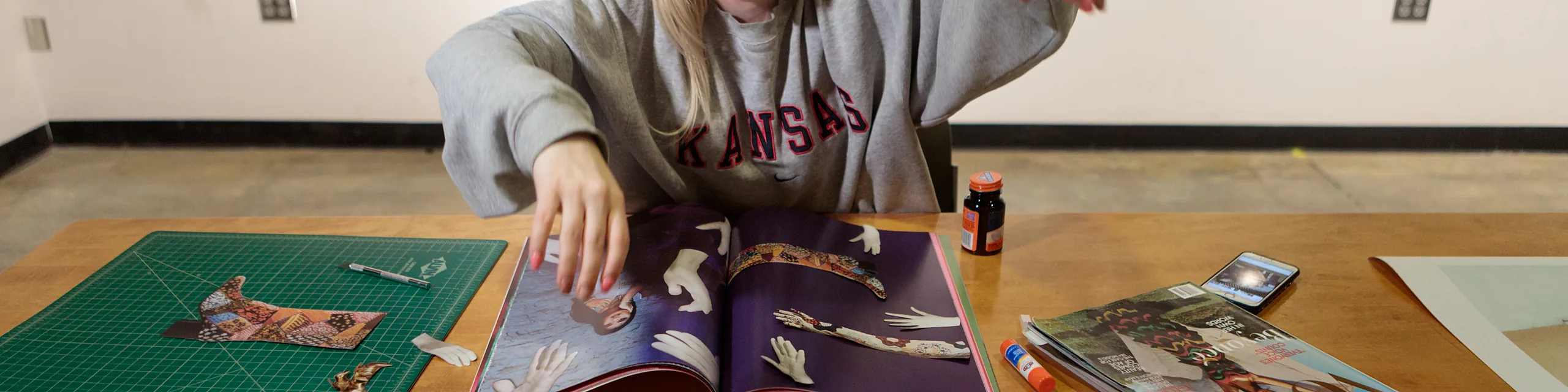
Program Overview
A degree in visual art prepares students to develop creative practice while building the technical and conceptual skills required to thrive in today’s dynamic arts landscape. Through intensive studio work, critical dialogue, and interdisciplinary exploration, students in this program cultivate artistic voice and professional readiness for careers across the arts, education, and creative industries.
The program emphasizes both individual expression and rigorous artistic training. Students pursuing a degree in visual art engage deeply with materials, processes, and artistic theory while participating in critiques, exhibitions, and collaborative projects. Studio coursework is complemented by studies in art history, contemporary practice, and visual culture, helping students situate their work within broader artistic traditions and emerging creative movements.
Faculty mentorship plays a central role in the program. Students work closely with practicing artists and scholars who guide them through studio experimentation and portfolio development. Through this supportive environment, students completing a degree in visual art gain the confidence and professional perspective necessary to build a meaningful artistic career or pursue advanced study.
Studio learning is paired with opportunities to showcase work in exhibitions and participate in critiques that strengthen analytical thinking and communication skills. These experiences help students refine their artistic process while learning how to present work professionally—essential preparation for anyone pursuing a degree in visual art in a contemporary creative field.
The curriculum encourages exploration across multiple media before students focus their artistic practice within a specific studio area. This structure allows students earning a degree in visual art to experiment broadly while developing specialized expertise in a chosen discipline.
Students may pursue one of several concentration pathways within the program:
- Ceramics – Focuses on clay-based practices, including sculptural ceramics, functional pottery, glazing techniques, and kiln firing processes.
- Metalsmithing/Jewelry – Explores metalworking, fabrication, and jewelry design while developing conceptual approaches to wearable and sculptural objects.
- Photography – Emphasizes photographic processes, digital imaging, visual storytelling, and contemporary photographic theory and practice.
- Textile/Fibers – Investigates fiber-based artistic practices such as weaving, surface design, installation, and experimental textile techniques.
- Visual Art Education – Combines studio practice with pedagogical preparation for students interested in teaching art in educational settings.
Regardless of concentration, students completing a degree in visual art build a strong portfolio that demonstrates technical mastery and conceptual development. Capstone experiences allow students to synthesize their artistic training through major projects or exhibitions that showcase the culmination of their work.
Learn more about KU
Undergraduate
For more information about the program, visit the program page below.
Visual Art, BA/BFAKU College of Liberal Arts and Sciences
The Bachelor’s in Visual Art is part of the College of Liberal Arts and Sciences, home to a collaborative and creative community making the world better through inquiry and research.Bachelor’s in Visual Art Learning Outcomes
Students completing this degree in visual art are expected to achieve several key learning outcomes that demonstrate artistic development, technical proficiency, and critical understanding of contemporary art practice. Graduates will be able to:
- Demonstrate advanced technical and creative skills across studio disciplines relevant to their chosen area of artistic practice.
- Produce original artwork that reflects thoughtful conceptual development and personal artistic voice.
- Apply knowledge of historical and contemporary art practices to inform creative work and critical interpretation.
- Communicate ideas effectively through visual media, written reflection, and participation in critiques.
- Evaluate artistic work using informed critical analysis and constructive dialogue.
- Develop a professional portfolio that demonstrates readiness for careers or advanced study related to a fine art degree.
What Careers are Possible with a Bachelor’s in Visual Art
Graduates with a degree in visual art develop creative, analytical, and visual communication skills valued across many industries. The hands-on studio training and conceptual development provided through this fine arts degree prepare students for both traditional art careers and creative roles in evolving professional fields. Potential career paths include:
- Professional artist or studio practitioner
- Photographer or visual storyteller
- Jewelry or metals artist
- Textile or fiber artist
- Gallery or museum professional
- Exhibition designer or curator
- Creative director or visual designer
- Arts administrator
According to labor market insights from Lightcast, many careers connected to a degree in visual art emphasize creativity, design thinking, and visual communication—skills increasingly sought across creative industries, education, media, and cultural institutions.
Tuition and Financial Aid
Tuition rates for the degree in visual art vary based on residency status and enrollment pathway. The University of Kansas offers scholarships, grants, loans, and work-study opportunities to support students financially. For more information, visit KU Financial Aid.Admission Requirements
All students interested in the degree in visual art program must meet the standard University of Kansas admission requirements for incoming freshman and transfer students. This includes:
Freshman
- 3.25 high school GPA OR 2.0 GPA and 21+ ACT
Transfer
- Assured admission with 24+ transferrable credit hours with a 2.5+ GPA from a regionally accredited higher education institution.
For detailed admission requirements, visit KU Admissions.
Student Life and Learning Experiences
Students pursuing a degree in visual art participate in a vibrant creative community that encourages collaboration, experimentation, and artistic exploration. Studio spaces, critique sessions, and exhibitions create an immersive environment where students refine their craft and learn from peers and faculty mentors.
Experiences that enrich the fine arts degree experience include:
- Studio courses with hands-on creative exploration
- Faculty mentorship from practicing artists
- Student exhibitions and gallery opportunities
- Collaborative creative projects
- Visiting artist lectures and workshops
These opportunities help students develop the confidence and professional awareness needed to thrive after completing a degree in visual art.
Bachelor’s in Visual Art Sample Courses
Students working toward a degree in visual art take a range of studio, theory, and art history courses designed to build technical skill and conceptual understanding. Sample courses may include:
- Drawing
- Art Concepts and Practice
- History of Western Art: Ancient Through Medieval
- Visual Art Studio
These courses support the creative development required for a fine arts degree while preparing students to produce professional-quality work. For a comprehensive list of courses and detailed descriptions, please review the KU Catalog.
Bachelor’s in Visual Art Frequently Asked Questions
When should I apply?
Applications are open and accepted on a rolling basis.
How long will it take to complete the degree?
Students typically complete this degree in four years.
Is the degree completely remote?
The degree is available on-campus